





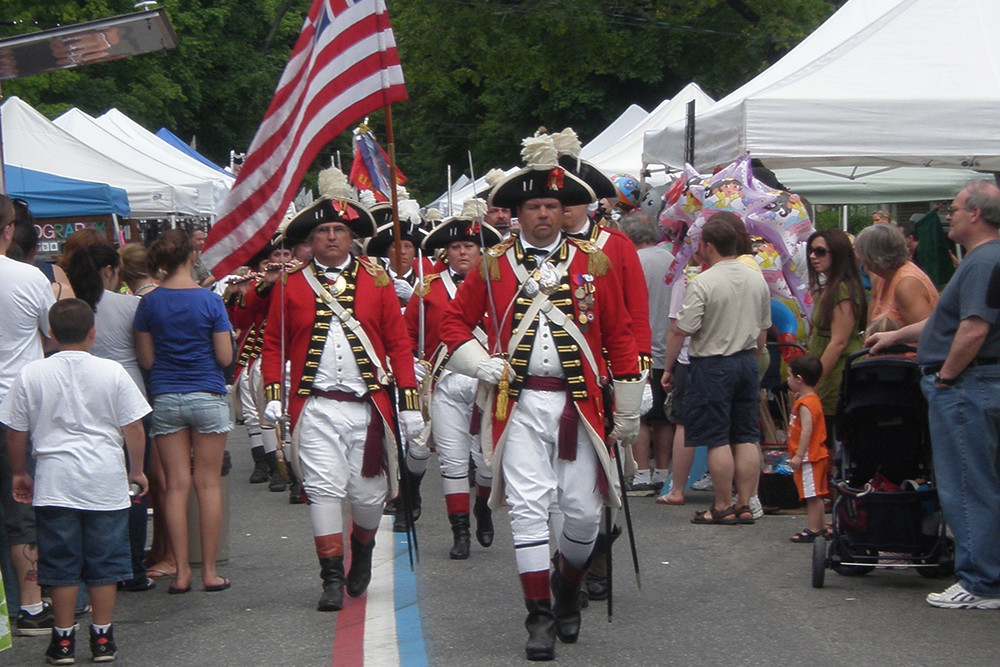


Some traditions feel woven into the local fabric of summer, and Gaspee Days is one of them. Every year, thousands of spectators gather along Narragansett Parkway in Pawtuxet Village to watch marching bands, colonial reenactors, community groups, colorful floats, and the unmistakable miniature cars driven by the Shriners. On Saturday, June 13, the annual Gaspee Days Parade returns from 10am-1pm, continuing a tradition that has brought history to life since 1965.
What many parade-goers may not realize is that the celebration honors an event that helped spark the American Revolution. The festival commemorates the 1772 burning of the British schooner HMS *Gaspee* by Rhode Island colonists, an act widely recognized as one of the earliest organized acts of resistance against British rule. Since 1965, the all-volunteer Gaspee Days Committee has kept that history alive through a community-wide celebration. As the organization notes, its mission is to preserve and promote Rhode Island's revolutionary heritage while creating events that bring families, neighbors, and visitors together year after year.
Just two years after the burning of the HMS Gaspee, the event was already making waves beyond Rhode Island. In 1774, while visiting Williamsburg, Virginia, George Washington paid to attend fireworks commemorating the second anniversary of the Gaspee Affair. Long before the Revolutionary War officially began, the incident had become a symbol of colonial resistance throughout the colonies.
By the mid-1960s, Rhode Island's revolutionary story risked fading from public memory. Many local historians felt the Gaspee Affair was being overshadowed by better-known events like the Boston Tea Party. In 1965, David Stackhouse, chairman of the Warwick Heritage Committee, joined local leaders, including L. Hazard Knowles, to form the Gaspee Days Committee. Their grassroots effort helped revive public interest in Rhode Island's revolutionary roots and launched the annual celebration that continues today.
When the inaugural parade rolled through Pawtuxet Village in 1966, participants focused almost entirely on colonial history. Marchers dressed as historical figures and reenactors brought the 18th century to life. Some organizers worried that adding modern elements might distract from the event's educational mission. Fortunately, the celebration evolved over time, creating the perfect blend of history and hometown fun that defines Gaspee Days today.
In 1992, the City of Warwick deeded the historic Aspray Boathouse on Pawtuxet Cove to the Gaspee Days Committee. Volunteers transformed the building into the organization's headquarters and community gathering space. Along the way, the festival earned national acclaim, including recognition as one of Discover America's top tourist attractions and prestigious honors such as the George Washington Honor Medal.
Most people know about the dramatic burning associated with Gaspee Days, but the committee has spent decades preserving the story in other ways, too. Commemorative coins, medallions, teacups, silver spoons, ornaments, and even a historic Gaspee torch light dating back to around 1840 help keep the event's legacy alive throughout the year. Together, these artifacts tell the story of how one night in 1772 became a tradition generations of Rhode Islanders continue to celebrate.
More than 250 years after the Gaspee Affair, the festival continues to celebrate the independent spirit that Rhode Islanders hold dear. For parade details, event schedules, and additional information, visit Gaspee Days online at gaspee.com.


Comments
No comments on this item Please log in to comment by clicking here